Conservation Officer (Aspen Hoverfly - Species Champion)
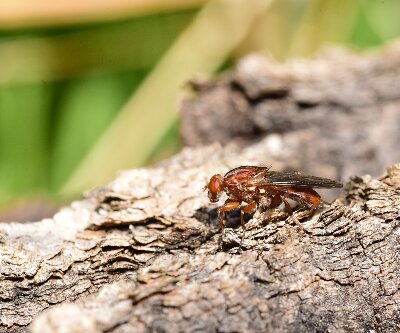
Would you like to play a key role in conserving the rare and threatened Aspen Hoverfly? Do you have the energy and enthusiasm to help us improve the fortunes of this scarce and elusive species?
We need your help to carry out our plans and fulfil our ambitions for the conservation of the Aspen Hoverfly in and around the Cairngorms through the role of Species Champion for Aspen Hoverfly. You really don't need to be an expert on Aspen Hoverfly to carry out this role, we just ask for enthusiasm, ambition and determination.
This role is part of the Rare Invertebrates in the Cairngorms (RIC) project, which works to conserve, protect, and enhance populations of five rare and threatened invertebrate species within the Cairngorms. We aim to have at least one volunteer Species Champion for each of these five project species. Species Champions use their enthusiasm, energy, and skills to focus on developing conservation plans, supporting the delivery of specific conservation actions for their project species, with each Species Champion taking a different approach. The RIC project is being organised with support and assistance of the RSPB Species Volunteer Network, which aims to get more volunteers involved in species recovery projects.
The Aspen Hoverfly is a critically endangered insect. It is only found in a handful of locations in the Scottish Highlands centred around the Cairngorms. The species relies on Aspen trees, adult Aspen Hoverflies lay their eggs into decaying or dead Aspen branches and trunks, the eggs then hatch and live within the rotting dead wood as larvae. The adult Aspen Hoverflies need plenty of nectar from flowering woodland plants to feed on. This variety of decaying mature Aspen trees and a range of flowering plants is rare within the Highlands now, which has contributed to the scarcity of this hoverfly.
As an Aspen Hoverfly Species Champion, you'll be most active from May to early July as adult hoverflies are surveyed at key sites. For the rest of the year you'll focus on visiting woodlands across the Cairngorms to record and map any potential Aspen Hoverfly breeding sites. Throughout the year you will have the opportunity to help with tasks like community outreach, planning, compiling data you’ve collected or habitat management, but we'll let you decide on which areas you focus most on. It’s an ideal role for someone who wishes to develop strong conservation skills or who wishes to get deeply involved in a species recovery project.
You don’t need to be an entomologist to get involved in this role, you just need enthusiasm and commitment!
How you carry out the role will partly depend on your approach, the skills and knowledge that you bring to the role and the needs of the project. Each of our Species Champion will approach their species in a different way, focusing on different key aspects of the role.
The role will include some or all of the tasks listed below:
-
Surveying, monitoring and mapping the Aspen Hoverfly and its habitat within the Cairngorms, both on your own and with other volunteers and staff.
-
Inputting Aspen Hoverfly survey data into a mapping database or making survey records available for someone else to enter.
-
Contributing to conservation action plans for Aspen Hoverfly.
-
Engaging with communities, volunteers and landowners to foster greater interest and appreciation for Aspen Hoverfly.
-
Depending on your interests, there may be the opportunity to get involved with Aspen Hoverfly steering group meetings.
It will require some key general skills, but please note that we will offer full training and induction into this role within the RSPB. We are keen to hear from volunteers with the following skills and abilities:
-
Enthusiasm for Aspen Hoverfly and a willingness to learn about the species and its ecology.
-
The role will require you to visit Aspen Hoverfly sites which are often in remote locations, so you will need a reasonable level of fitness, with the ability to walk up to 2-4 km on uneven and often rough terrain. If physical ability is an issue there may be opportunities to adapt the role to suit your needs, for example co-ordinating other volunteers in carrying out remote surveys or getting involved in mapping the survey data.
-
Excellent communication skills for engaging with different audiences, internal and external to the RSPB.
-
Basic IT skills, such as producing spreadsheets and word documents.
-
Good organisational skills with the ability to work independently, alongside other volunteers or with a RIC project officer.
With all our RIC target species, we need to accurately record where they are found and store this information safely. We use digital mapping software (GIS) to do this. We are keen to hear from people who are interested in learning how to use GIS digital mapping software to accurately record species and habitat data.
The role is best suited to someone living within or close to the Cairngorms National Park. You will need access to your own transport to access the Cairngorms.
The role is best suited to someone who can commit to it for at least 12 months. How often you volunteer in this role will vary according to the season, the tasks and your interests, but it is likely to be around once a week during May, June and early July, dropping back to around once a fortnight or once a month for the rest of the year. We always try to be very flexible and adjust the role to your needs and other commitments as much as possible.
This role provides the opportunity to develop hands on experience and skills around insect surveying and monitoring. The role will enable you to build experience in delivering species conservation through working with communities, volunteers, landowners, and other conservation organisations. We will offer training, induction, and ongoing support to ensure that you are prepared for the specific needs of the role. We are a friendly and welcoming team, so you'll have the opportunity to make new friends too.